
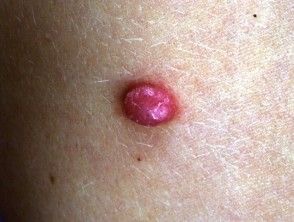
The Nurse Clinic is considered one the leading private clinics for Pyogenic Granuloma Removal in the local area.
Situated conveniently between Milton Keynes and Bedford in the village of Astwood.
What is a Pyogenic Granuloma?
A Pyogenic Granuloma is an acquired benign proliferation of capillary blood vessels of the skin and mouth. It is a form of a lobular capillary haemangioma. The lesions often present as painless red fleshy nodules that bleed easily, crust occasionally and grow in size rapidly over weeks.
Main causes of pyogenic granuloma occurance are Trauma, Infection, Hormonal influences and medications.
Treatment Options For Pyogenic Granuloma Removal
Pros to Shave Excision
Fast and single-session: Clears the visible lesion right away, unlike some multi-session laser treatments.
Good cosmetic results: Leaves a smaller, less noticeable flat scar than a deep surgical excision with stitches.
Pathology confirmation: Keeps the removed tissue intact so the lab can test it and confirm the diagnosis.
Less invasive: Avoids deep cutting and stitches when paired with a base-sealing method like electrocautery or silver nitrate
Cons to Shave Excision
High Recurrence Risk: The growth often returns because shave tools may not reach the deep blood vessel roots.
Significant Bleeding: Pyogenic granulomas are packed with tiny blood vessels and tend to bleed a lot when cut.
Incomplete Pathology Sample: Shaving the lesion flat may leave part of the base behind, making it hard for labs to test the entire tissue structure.
Need for Extra Burning/Cautery: Usually must burn or treat the base with chemicals like silver nitrate afterward to stop bleeding, or cauterising which adds healing time
Important things to know
Consent
Before giving consent, the you must understand the alternatives available (that may include not treating the lesion), what to expect at the operation and post-operatively, including possible complications.
This information will be included in your written consent form. It will also be discussed prior to the procedure to ensure you are fully happy to proceed and understand.
AREAS WE CANNOT TREAT
We DO NOT remove pyogenic granuloma in the:
- GENITALS
- ANUS
- MOUTH
SCARRING
There is 100% chance of scarring!
After the initial procedure the scar will be red and inflamed but over time this will fade and become less noticeable.
If you have a history of Keloid Scars then please tell your clinician as this increases your risk of an unsightly scar
Histology
The Nurse Clinic sends all excised lesions to Histology for diagnosis. This helps aid diagnosis, protect patients but also adheres to the latest clinical guidelines.
What looks like a harmless lesion could be something totally different.
Early and accurate diagnosis is vital and misidentifying a growth can lead to a patient delaying treatment.
You will be informed of the histology results by encrypted email.
Sterile environment
All minor surgery is performed within a sterile environment. This is crucial during any surgical procedure, even minor surgery and adheres to CQC, NMC and all clinical safety guidelines.
Non-sterile conditions can introduce bacteria and increasing the risk of infection and delayed healing
The surgical equipment used at The Nurse Clinic is single use
is this normal?
The first couple of days your wound may be tender and may bleed slightly when doing wound care.
There may be swelling and bruising around the wound
The area around your wound may be numb for several weeks or even months.
You may experience periodic sharp pain as the wound heals.
The stitch line will look dark pink at first and the edges of the wound will be reddened. This will lighten day by day
POST OPERATIVE BLEEDING
Leave the dressing on and keep it dry. If it should come loose, you may retape it, but do not take it off.
No vigorous exercise or heavy lifting or alcohol. This could cause the wound to bleed.
Post-operative pain is usually mild. You may take paracetamol (if not allergic or any interactions). This can be started as soon as you get home. Do not take aspirin or any drugs such as Nurofen.
You may see a small amount of drainage or blood on your pressure bandage. This is normal. However, if the drainage or bleeding continues and saturates the bandage, please do as follows:
Apply firm pressure with a gauze swab over the bandage for 15 minutes.
If bleeding still continues, apply an ice pack for 15 minutes to the bandaged area. Placing a bag of frozen peas into a dry plastic bag can make a simple ice pack. This avoids wetting the bandage.
If bleeding still continues, call our department during office hours or go to A&E.
infection / Nerve damage
Infection can occur after the procedure. This may present as heat, redness, weeping or pus from the wound.
Nerve damage is rare.
If you experience a fever or any of these symptoms, contact your healthcare provider immediately for assessment and possible treatment.
aftercare
Shave Excision of Pyogenic Granuloma will leave a scab which will be covered with a waterproof dressing for 2-3 days. It may take up to 10-14 days to heal.