
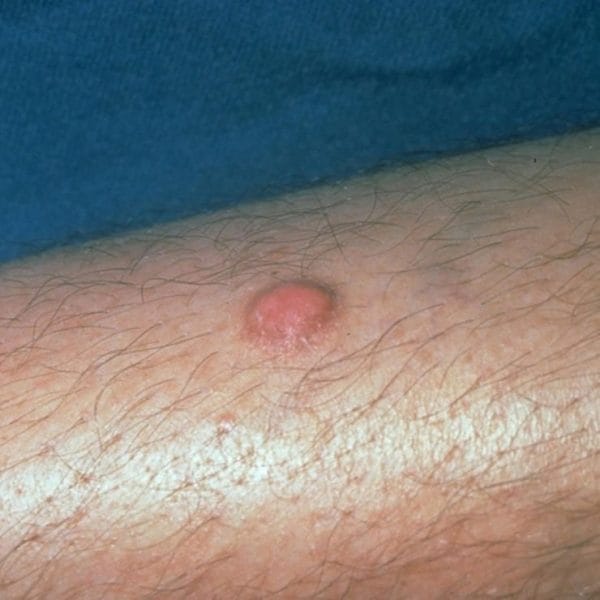
The Nurse Clinic is considered one the leading private clinics for Dermatofibroma Removal in the local area.
Situated conveniently between Milton Keynes and Bedford in the village of Astwood.
What is a Dermatofibroma?
A dermatofibroma is a common overgrowth of the fibrous tissue situated in the dermis (the deeper of the two main layers of the skin). It is benign (harmless) and will not turn into a cancer.
Whilst dermatofibromas are harmless, they can be similar in appearance to other skin lesions like moles
We only treat patients aged 18 and over
Treatment Options For Dermatofibroma Removal
Pros of Cryotherapy
Non-invasive: No surgical incisions or sutures are needed, which lowers the risk of operational complications.
Fast procedure: The actual freezing process takes only a few minutes per session.
No anesthesia: The extreme cold numbs the area, so needles for local numbing are usually unnecessary.
Low downtime: You can return to normal daily activities right away.
Improved appearance: It can flatten or lighten stubborn, raised, or itchy spots when complete surgical removal is not preferred
Cons of Cryotherapy
High Recurrence: Freezing often fails to reach the deep dermal root, so the bump can grow back.
No Histology: Cryotherapy destroys the tissue. You miss the chance to send a sample to a lab to confirm it is benign or rule out mimics like skin cancers.
Skin Discoloration: Treated spots frequently cause permanent light spots (hypopigmentation) or dark spots (hyperpigmentation).
Incomplete Flattening: It may flatten the top layer slightly, but a firm core often remains under the skin
Pros to Shave Excision
No stitches: The skin heals naturally from the base, which avoids the need for suture placement and follow-up removal visits.
Quick procedure: The doctor numbs the skin and shaves the bump flat in just a few minutes.
Less linear scarring: It trades a raised bump for a flat, round surface mark rather than a long knife-cut scar.
Less downtime: Healing is fast and simple with basic wound care instructions
Higher recurrence: The deep fibrous core remains under the skin, meaning the bump can slowly grow back.
Cons to Shave Excision
Growth returns: The root of a dermatofibroma sits deep inside the dermis layer. Shaving the top off leaves the base behind, causing the bump to frequently regrow over time.
Incomplete removal: Unlike a full surgical excision that cuts out the entire depth, a shave technique cannot guarantee total clearance.
Depressed or Discoloured Scars: Shaving down a deep lesion often leaves a flat, white, or dark round mark that can look just as bothersome as the original bump.
Persistent surface irregularities: The area may heal with an uneven texture or continue to catch and irritate surrounding skin
Pros to Full Excision
Complete Removal: It reaches deep into the dermis and fat layers to extract the entire growth.
Lower Recurrence: It prevents the lesion from growing back. Shave removals often leave cells behind.
Pathology Ready: It provides an intact sample for lab analysis to confirm the diagnosis.
Clean Healing: The spindle shape closes neatly into a simple linear scar without puckered edges.
Cons to Full Excision
Permanent Scarring: The length of an elliptical cut must be roughly three times its width to close flat, meaning the resulting linear scar is noticeably longer than the small original bump.
Worse Cosmetic Outcome: Because dermatofibromas are harmless, the final scar can sometimes look more conspicuous or bothersome than the original lesion.
Standard Surgical Risks: Minor bleeding, bruising, swelling, localized pain, and a small risk of wound infection.
Nerve or Tissue Disruption: Temporary or permanent minor numbness (paresthesia) can occur around the site if tiny sensory nerves are cut.
Not Always Necessary: Dermatofibromas are benign (non-cancerous) skin growths, meaning surgery is elective unless the spot is frequently irritated by clothing, painful, or diagnostically uncertain
Important things to know
Consent
Before giving consent, the you must understand the alternatives available (that may include not treating the Dermatofibroma), what to expect at the operation and post-operatively, including possible complications.
This information will be included in your written consent form. It will also be discussed prior to the procedure to ensure you are fully happy to proceed and understand.
AREAS WE CANNOT TREAT
We DO NOT remove Dermatofibroma in the:
- GENITALS
- ANUS
SCARRING
There is 100% chance of scarring!
After the initial procedure the scar will be red and inflamed but over time this will fade and become less noticeable.
If you have a history of Keloid Scars then please tell your clinician as this increases your risk of an unsightly scar
Histology
The Nurse Clinic sends all excised lesions to Histology for diagnosis. This helps aid diagnosis, protect patients but also adheres to the latest clinical guidelines.
What looks like a harmless lesion could be something totally different.
Early and accurate diagnosis is vital and misidentifying a growth can lead to a patient delaying treatment.
You will be informed of the histology results by encrypted email.
Sterile environment
All minor surgery is performed within a sterile environment. This is crucial during any surgical procedure, even minor surgery and adheres to CQC, NMC and all clinical safety guidelines.
Non-sterile conditions can introduce bacteria and increasing the risk of infection and delayed healing
The surgical equipment used at The Nurse Clinic is single use
is this normal?
The first couple of days your wound may be tender and may bleed slightly when doing wound care.
There may be swelling and bruising around the wound
The area around your wound may be numb for several weeks or even months.
You may experience periodic sharp pain as the wound heals.
The stitch line will look dark pink at first and the edges of the wound will be reddened. This will lighten day by day
POST OPERATIVE BLEEDING
Leave the dressing on and keep it dry. If it should come loose, you may retape it, but do not take it off.
No vigorous exercise or heavy lifting or alcohol. This could cause the wound to bleed.
Post-operative pain is usually mild. You may take paracetamol (if not allergic or any interactions). This can be started as soon as you get home. Do not take aspirin or any drugs such as Nurofen.
You may see a small amount of drainage or blood on your pressure bandage. This is normal. However, if the drainage or bleeding continues and saturates the bandage, please do as follows:
Apply firm pressure with a gauze swab over the bandage for 15 minutes.
If bleeding still continues, apply an ice pack for 15 minutes to the bandaged area. Placing a bag of frozen peas into a dry plastic bag can make a simple ice pack. This avoids wetting the bandage.
If bleeding still continues, call our department during office hours or go to A&E.
infection / Nerve damage
Infection can occur after the procedure. This may present as heat, redness, weeping or pus from the wound.
Nerve damage is rare.
If you experience a fever or any of these symptoms, contact your healthcare provider immediately for assessment and possible treatment.
aftercare
Cryotherapy to Dermatofibroma can take up to 4 weeks to be effective and very occasionally require an additional treatment. (full prices apply)
Shave Excision of Dermatofibroma will leave a scab which will be covered with a waterproof dressing for 2-3 days. It may take up to 10 days to heal.
Full Ellipse Excision involves removal of sutures after 7-10 days. This will incur an additional £65 appointment charge. To book a REMOVAL OF SUTURES APPOINTMENT please use the following link